Saturday, August 6, 2016

Ten Biggest Epics Of All Time

There is clearly nothing more cinematically satisfying than a solid, old-fashioned epic that runs for more than three hours, has a cast of powerhouse performances, pithy monologues and epic battle scenes and setpieces that take the breath away. Drama, romance, adventure and emotions all come in spades in a classic epic. 

The ten mammoth movies in this line-up are not strictly Biblical epics or ones set in the era of swords and sandals. But they are epic stuff in the way they often take the breath away with their grandeur and ambition. So, if you want a solid dose of epic greatness, well read on and discover for yourselves.


10- Ben-Hur (1959)


William Wyler's expensive, record-smashing take on Lew Wallace's stuffy Biblical novel is far from what you call a masterpiece. Yes, even with the whole slate of 11 prestigious Oscars statuettes, it is not exactly a great film per se. The narrative is burdensome, the dialogue strictly perfunctory and the performances (yes, including both Hugh Griffith and Charlton Heston) are largely wooden. But let's not forget- 'Ben-Hur' was the grandiose, king-size and stubbornly old-fashioned epic that Hollywood was intended to make in the coming future. 

The meticulously created sets (numbering to a record of 300) bring a majestic sweep to all the pulpy dramatic proceedings. Even the more ridiculous scenes and lines are made somewhat monumental by the visual grandeur (big thanks to Robert Surtees' mesmerizing cinematography). Most of all, there is nothing in terms of full-throttle action even today to match the deliriously enthralling chariot race (helmed impressively by Andrew Marton and Yakima Cannutt) that breaks out the film's sword-and-sandal glory with fury. 


9- Braveheart (1995)


There has been no other Oscar winner which has been so debated in its public opinion than 'Braveheart'. The critics cry foul over its dodgy historical accuracy and the way it aims for a primitive viewpoint instead of something more complex. The audiences, on the other hand, lap it up lovingly as a thrilling and heroic tale of William Wallace, the legendary Scottish insurgent who rose up against the English invaders with guts and glory. It is high time since there has been a middle ground. True, actor/director Mel Gibson infuses his biopic with the same stuffy hokum that the critics complain rightly about. 

The politics are non-existent, the English invaders are portrayed eventually as only nasty villains and the understated emotion is offset by the film's ridiculous air-brushing of facts and ham-fisted hero-worship. But when the battle cries resound in the air, there is nothing like 'Braveheart'. Letting rip immensely epic sequences of blood, fire and fury, Gibson and cinematographer John Toll create a harsh, unfurnished world of medieval war that is both gruesome and giddily thrilling. It is the fiery violence and emotional wallop that qualify it as something truly epic.


8- Apocalypse Now (1979)


Francis Ford Coppola's spectacular Vietnam War drama is mostly a sobering meditation on the conflict, its lasting damage on life, mind and the horror…. Nevertheless, 'Apocalypse Now' is as much a visually operatic experience as much as one that makes us feel haunted with the all-too-well-known terrors of war. The journey of war-weary Captain Willard (a superb Martin Sheen) is one that you cannot take your eyes away from, even as it frequently turns violent, nightmarish and deathly by turns. 

Cinematographer extraordinaire Vittorio Storraro shoots the lush jungles, river inlets and ultimately Colonel Kurtz's demented camp of renegades with the eye of a warrior poet. Never has the brutality of a war looked so ethereal, never has horror felt so gorgeous in its intensity. Entire sequences are jaw-dropping in sheer eye-popping wonder- be it the rousing helicopter raid set to Wagner's 'The Ride Of The Valkyries' or the freaked-out climax set to the Oedipal ramblings of The Doors. As a bonus, Marlon Brando's hypnotic Kurtz even spouts many a classic monologue.


7- Once Upon A Time In The West (1968)


By the time 'Once Upon A Time' was made, director Sergio Leone had already mastered a new form of Western myth-making. Not for him anymore the tongue-in-cheek tone of his early films or the stuffy moralizing of John Ford- his cinematic world was now bleak and brooding, his landscape rendered harsh rather than romantic and his characters desperate loners driven to violent ends. Did he, indirectly, influence Peckinpah's latter films too? Like all great westerns, 'Once Upon A Time' is unforgettably iconic for its legendary bursts of gunplay in between spare talk and even more striking silences. 

But through its genre premise- a vengeful hero (Charles Bronson), a devilish villain (Henry Fonda, with blue-eyed menace), a goofy sidekick (Jason Robards) and a delectable belle (the alluring Claudia Cardinale)-it is also a truly epic farewell to the landscape for once and for all. The profound theme of civilization encroaching on the old ways of the West is portrayed in true epic-like fashion in the film's wide, sunbaked vistas where people settle their scores in blood. Mesmeric, moody and melancholic- it is an epic experience for ages.


6- Seven Samurai (1954)


Akira Kurosawa did more than just influence a whole slew of up-and-coming filmmakers of the 60s and 70s; he also created whole new genres, whole new tropes and shamed all Hollywood epic-makers with his 1954 masterpiece. In every sense, 'Seven Samurai' is a swashbuckler that most Western filmmakers cannot even come close to making. Its influences are all too palpable- there is the ho-hum 'The Magnificent Seven' and there is also Bollywood's very own 'Sholay', as well as the fun-filled 'A Bug's Life'. On its own, it is a marvelously epic ballad- of seven masterless warriors defending a vulnerable village against bandits. 

In the expansive space of more than three hours, Kurosawa stages some of the most relentless, brutally breakneck and exhilarating scenes of galloping, slashing, stabbing and roaring battle action soaked in mud and rain. And in case, if anyone wants story, character development and drama, well he gives us those in spades too. Just watch out for Toshiru Mifune's butter-fingered yet empathetic Kikuchiyo bursting out at fellow samurais about the plight of villagers. Classic.


5- Mughal-E-Azam (1960)
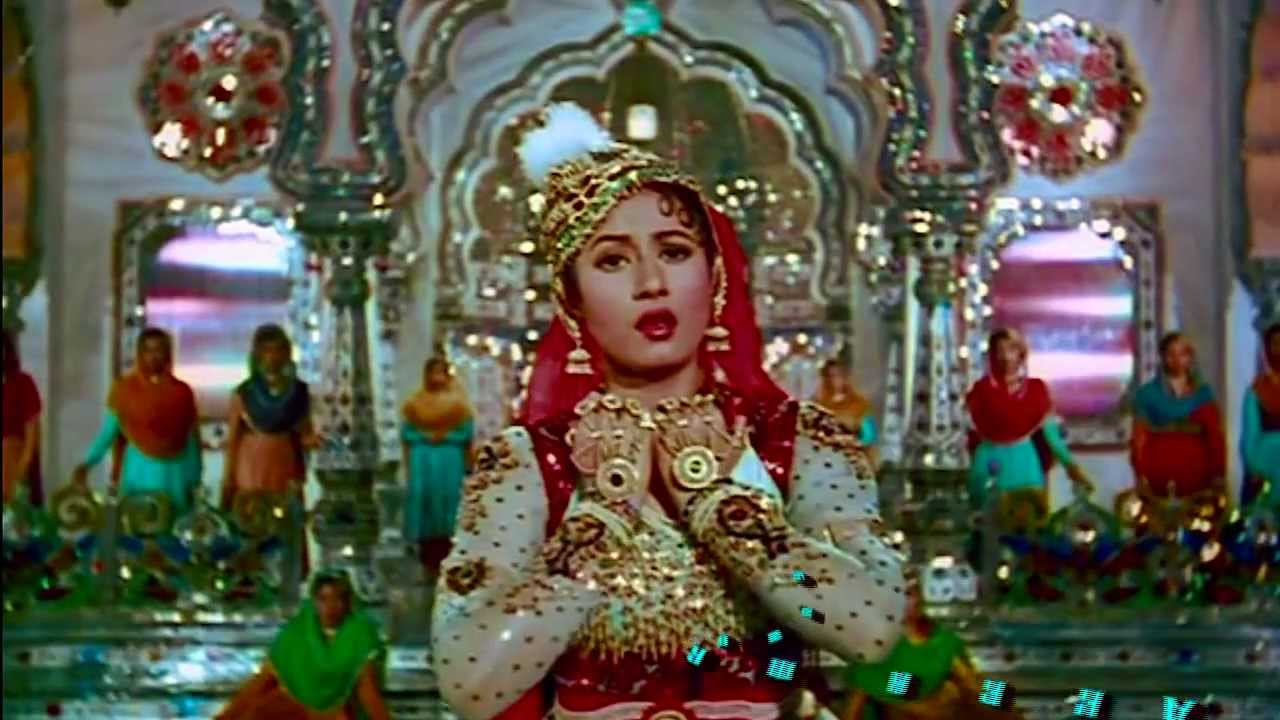

One day, hopefully, present-day Bollywood will produce a film that is as epic in scale, and as monumentally rousing as 'Mughal-E-Azam'. Sure, the likes of 'Jodhaa Akbar' and 'Bajirao Mastaani' come a bit close but they will forever be in the mammoth shadow of K. Asif's- and Bollywood's only- magnum opus. More than fifty-years after it stunned audiences with the sheer majestic force of drama and romance, it remains to be fresh in both sight and sound, in both grandeur and histrionics. 

The plot is classic, star-crossed romance- the ill-fated love between dreamy-eyed Prince Salim (a charismatic Dilip Kumar) and the demure courtesan Anarkali (a beautiful Madhubala), whose fortunes are doomed by the justice-seeking Emperor Akbar (played with panache by Prithviraj Kapoor). The film oscillates beautifully from jubiliant cheers to stolen glances, from sad-eyed heartbreak to intriguing statecraft and finally, from dusty, grand battles to the fireworks of powerful dialogue. Entire moments still feel iconic and no matter how much they try, film-makers can never better 'Pyaar Kiya To Darna Kya' as a musical explosion of spectacle.


4- Kingdom Of Heaven (2005)


Like most Ridley Scott films, 'Kingdom Of Heaven' is best viewed in its extensive, expansive and exhilarating 'Director's Cut' edition which runs for a whopping 189 minutes and delivers massive spectacle, bloody battle action and incisive storytelling in equal measure. The mesmeric ballad-like tale follows guilt-ridden blacksmith Balian (a stiff but serviceable Orlando Bloom) as he is tugged from the frosty hills to the sun-kissed ghettoes and palm fronds of Jerusalem, to become involved in its muddling Crusades-era politics. The leper king Baldwin (a terrific Edward Norton) maintains a benevolent peace with the gallant Saladin (Ghassan Massoud) even as jackals are baying on both sides for blood and battle. Also, Balian is torn between his loyalty to the helpless town-folk and his new-found attraction for the royal Sibylla (Eva Green).

Chaos erupts without warning and the film reaches a head with explosions of dust, blood, oil and artillery- possibly some of the most incredible battle sequences ever put on the screen. But more crucially, this is also Scott in brilliant 'Blade Runner' form. He directs the proceedings with intimacy and perspective, presents strident and quietly provocative politics, makes it all look sublime(sensuously shot by John Mathieson) and doles out an epic feast for both the eye and the mind. Revisit it and be rewarded.


3- Barry Lyndon (1975)


Epic scale is never far away from the arena of Stanley Kubrick. Was not '2001-A Space Odyssey' an epic quest of the mysteries of deep space? Was not 'Dr. Strangelove' an epic farce on the inevitability of nuclear holocaust? And was not 'The Shining' an epic tragedy of insanity and familial destruction painted in blood-red?

So, what makes 'Barry Lyndon' make the cut in this list? Simple enough. While all these films were about humans falling prey to machines and forces beyond their control, 'Barry Lyndon' is all about the flimsy nature of civilization itself. William Makepeace Thackeray may have intended it as a simple ballad of a young man rising in the ranks of aristocracy but Kubrick gives it his own cynically brilliant twist. It exposes the sheer futility of the grand facades; its emotional coldness is deliberate and reflective of facile emotions of a fake society.

Let's not forget- it is also, quite simply, a truly sumptous feast for the senses and i don't mean any of the Technicolor gloss of his earlier, flawed 'Spartacus' or even the mawkish farce of some other epics of the time. 'Barry Lyndon' set the yardstick for painstaking period detail and grandeur. Art directors Ken Adams and Roy Walker  recreate both opulent palace interiors and idyliic farmhouses and pastures while Kubrick and photographer John Alcott shoot powder blue skies, grey clouds, sun-dappled meadows and- in a technical masterstroke- even candle-light serving as the only mesmeric illumination in a pre-electrical age. The result is that rare epic that Hollywood has forgotten to make- intelligent, monumental and brilliant.


2- Lawrence Of Arabia (1962)


Before I go on to gush with praise about its numerous virtues, let's get done with the minor niggles. Robert Bolt's narrative is crammed with memorable dialogue for the memorable actors to wield but falls short of portraying a convincingly credible picture of the eponymous war hero himself. Sure, Thomas Edward Lawrence comes off as both eccentric and excitingly rousing in equal measure (no small thanks to Peter O'Toole's charismatic performance) but the film rarely makes a solid case for his rougher edges and glosses over them in a fair bit of hero-worship. But then this is a film about heroics and the finest one at that.

With 'Lawrence Of Arabia', David Lean mastered the epic format with sheer perfection. Running at nearly 4 hours and dominated, for most part, by verbally charged sequences when the top-notch actors trade platitudes, it is a mammoth experience but one that needs to be witnessed to be believed. Among the many things that Lean did, he also set the yardstick for true visual grandeur. Freddie Young's epic Panavision cinematography captured both the sun-drenched beauty as well as the soaring heat of warfare in the desert while John Box's sets recreated the colonial club rooms as well as the camp-tents with great credibility.

One of the biggest attractions is how, even after all these years, this is a sight to behold on a silver screen, no less. There are entire images that make the viewer spellbound, aided by Maurice Jarre's elegant score; there are also many moments of shattering silence that make your jaw drop- the shimmering mirage of Sheikh Ali on the horizon or the occasional moment of calm in between the frenetic desert battles that makes you think about all the bloodshed. And there is a really epic feel to the film's spoken words too, thanks, of course, to that great cast. O'Toole is superbly assisted by Alec Guinness' stately Prince Feisal, Omar Sharif's Ali and Anthony Quinn's grizzly Auda Abu Tayi.


1- Lord Of The Rings- The Fellowship Of The Ring (2001)


All it took Peter Jackson was one mammoth film-making accomplishment to shame almost every single major Hollywood director and set the new rules of modern epic making in Hollywood. Noone ever imagined that a brash talent from the Outback would take the world by storm by adapting J.R. Tolkien's massive fantasy saga and made it a household name.

But while 'Two Towers' focused more on stealthy suspense and 'Return Of The King piled on the kind of ambitious, jaw-dropping action that most film-makers could only dream of, 'Fellowship' feels like a truly mesmerizing, old-school ballad that doles out the goods with wonderful indulgence. The film's beautiful, effortless shifts- from the pastoral idyll of Hobbiton to the Gothic adventure in the dusky woods, to the pacy adventure from caves of Mordor to the swashbuckling finale-lend the entire film a classical elegance that is missing in most recent epics. This feels like a bona fide adventure that entertains, hammers home chills and offers enough emotions as well to make it meaty enough.

Most crucially, like a true classic epic adventure, 'Fellowship' is also largely a film that makes us root for the heroes and rally against the villains. Jackson intended to portray Tolkien's fantasy as something that has actually happened and the film's sheer narrative depth and dramatic thrust shows that in spades- it is a story you want to believe in. Blending the stately sweep of Lean and the humanity of Kurosawa, Jackson crafted the ultimate thing- the Lord of all epics.


Tuesday, July 26, 2016

Surviving Hollywood's Killing Joke

Why Alan Moore's immeasurably brilliant comics should be best left alone.

It is the well-worn rule of most cinematic novel adaptations- that they may all turn out to be uniformly inferior to their source. Unless, of course, the people at the helm of these adaptations might be, say, Francis Ford Coppola, David Lynch, Stanley Kubrick or Paul Thomas Anderson, who turn great, challenging masterworks of literature into genuinely great and challenging films themselves. 

And yet while many iconic writers have been lucky to have such filmmakers either stay true or give their own take to their fantastic tales (except for Stephen King, who dismissed Kubrick's magnificent 'The Shining'), it is a glaring tragedy to see how one of the greatest comic-book writers gets a raw deal in terms of his influential and incendiary work handed over to utter amateurs making a grand mess of them all.


An elusive, enigmatic personality, embodied physically by that legendary lion's mane and those devilish eyes that might give lily-livered readers the creeps, Alan Moore was the man who radicalized the comic book genre of American literature. So far, comics were thought as infantile pulp fiction, bringing life to the fervent fantasies of adolescent boys. Sure, Moore was not alone- fellow wizards Frank Miller, Grant Morrison, Len Wein and Neil Gaiman were also experimenting with the template and pushed the boundaries brilliantly. But few- repeat, none- have brought the staggering narrative depth, pop culture critique and reflexive genre satire that the wild-eyed Englishman from Northampton brought to panel grids and speech bubbles. 


I, as a fervent fanboy, credit him solely for bringing me back to the crazy, chaotic yet stimulating world of comics. And yet, Moore has done that, time and again, by tweaking, playing and finally breaking the rules that define the very essence of this section of modern literature. While he has often smashed the superhero-genre mould by debunking the myths of masked protectors and guardians, he has also ushered in a darker style of storytelling that has also transmuted itself to much of the recent superhero cinema in many ways. While he brought in unbridled grittiness and sexuality into comic book pages, he has also doffed his hat, delightfully at the old-school tropes; check out his colourfully charming limited series '1963' for great digs at the Marvel comics of the 60s and you can also spot nods at previous masters Jack Kirby and Jerry Siegel in his extraordinary work for the DC Comics Universe in the 1980s. While he invented a new form of graphic storytelling, bursting with politics, social commentary, weighty philosophy and satire, he also proved that comics could still be a hell lot of perverse fun- just read any one of his rollicking 'League Of Extraordinary Gentlemen' volumes and you will get the idea.

And yet, he has always the misfortune of seeing his finest work made into shoddy, ill-conceived films that somehow miss the gist of what he originally wanted to portray.


I haven't yet seen the film version of his dark, dank and dystopian masterpiece 'From Hell' but the choice of casting A-lister Johnny Depp as Frederick Abberline, who was originally a portly, frustrated inspector stumbling on the bitterly dark truth of the Jack The Ripper murders, itself makes me doubt that it will be even half as good. Then, Stephen Norrington's 'League Of Extraordinary Gentlemen' took only a few cues from the said series of violently enthralling and sexually ribald steam-punk adventures and turned it into a mediocre action film enlivened only by Naseeruddin Shah. James McTigue turned 'V For Vendetta' and its rich, provocative anti-Thatcher politics into a cliched and ham-fisted modern-day parable that felt hardly relevant. And finally, there was the crime of all crimes- fanboy Zack Snyder turning the great, great 'Watchmen' into a supposedly dark superhero yarn that only piled on gore and sex without ever realizing why the book used them in the first place.

And, as if that was not enough, they just murdered the classic Batman story 'The Killing Joke'.


Expectations were high, indeed. Bruce Timm, one of the brilliant execs who had thought up the unforgettably iconic 'Batman- The Animated Series' back in the 90s, was at the helm of this too and had roped in the same crew as well. Having Kevin Conroy back as Batman's voice was a treat, as was having Mark Hamill again (yes, I mean our very own Luke Skywalker) for the snarling voice of The Joker. And the inevitable question hovered in our heads- will this direct-to-video animated film be the perfect adaptation of a Moore story?

The answer is 'NO'.

The decisions that 'Batman- The Killing Joke' makes are giant errors. To begin with, the deservingly lambasted first act of the film has a terrible, almost cliched sub-plot involving Batman, Batgirl aka Barbara Gordon and…um…a one-night stand between the two. Yes, I wish I was kidding. God alone knows what is the purpose of this lengthy prelude, which begins with Batgirl, trying to chase down some typical criminals and also being harassed at office by colleagues who ask her about her sex life. And one night, after trying her valiant best to kick ass, she falls for the Caped Crusader in painfully sexist fashion and the two make out without even a shred of real eroticism.

The problem is here of two things. Firstly, this totally redundant prologue disrupts the pace of the rich narrative of the source that follows. Secondly, if the makers intended it as a ploy to develop Batgirl more credibly, well even on that level the ploy misfires. Moore did not need to dwell too much on Barbara Gordon to make us feel for her subsequent disaster and his plot stuck mainly with unveiling Batman's darker, psychopathic side and revealing the hidden broken heart of The Joker. This new plot track, as well as the little but glaring detours from the narrative, merely nails Batgirl as a typical damsel in distress and totally not worth the empathy of the audience.


And by the way, what is wrong with the artwork, guys? The true beauty of the book was Brian Bolland's unforgettably mesmerizing and menacing panels that brought to life the great prose accompanying them. One of the most noticeable virtues of the story was how visually stunning it felt- the panels soaked in scarlet, orange and inky blue and teeming with chaos and texture- from the dark shadows of the Arkham Asylum to the murky gloom of The Joker's tenement house to the psychedelic pathos that the villain unleashes on Commissioner Gordon right down to the much-debated rain-soaked climax. There was a nifty perspective in Bolland's process- shifting thrillingly from The Joker grinning devilishly to men chomping on shrimps in a crowded bar. There is none of that dazzle in the film and the frames merely look grey, dull and unexciting. Also, for some strange reasons, the backdrops are utterly lifeless and static. This was never the case, even with the seminal animated series episodes that were bursting with menace and personality.

None of this will matter to the many virgins, who are obviously even unaware about the comic book or its legacy as a story that would shape other forms of its genre as well as films made on the hero. I would not be surprised if many people would have already started to hail this as something subversive. They are obviously being ignorant. The real blame should go to the people at Warner Brothers and DC, who are allowing many a legendary comic book to be abused at the hands of amateurs who don't even understand their brilliance.

To my horror, I discovered that Brian Azzarello, an ace comics writer in his own right, was the one who decided to pen this sloppy adaptation of the book and it was he who decided to go for that disastrous first act as well. Yet, this is hardly surprising. Azzarello is, after all, one of the many solid DC writers who were roped in to create the despicable 'Before Watchmen' series, which needlessly set out to explore the background stories of each of the iconic characters. Why? Moore had already provided us enough material and Dave Gibbons had ensured that his drawings and creations remained unforgettable. Why all this needless plundering of the excellent source? It could all be a continued part of DC Comics to cash in on the sheer legacy of the graphic novel. I can almost imagine the great bearded writer glaring his fiery-eyes at all the mess that they have made of his work.

The solution would be to leave them all alone. Someone- preferably a lover of these books- should go ahead and tell people like Azzarello, Snyder, the Wachowskis and pretty much everyone in DC Comics to stop trying to sound as fanboys and instead focus on some other things. Moore's comics are a treasure for us, lovers of the panels and strips, and it would be best if you leave them alone, and let us all read them and get entranced into a world of darkness, poetry and storytelling brilliance.

Saturday, July 16, 2016

Sultan- Same Old Rocky and Raging Bull Story


Mid-way Ali Abbas Zafar's 'Sultan'- sounding already like a heavyweight biopic rather than a solid sport drama- Randeep Hooda's disgruntled trainer- mentioned in opening credits as one in a special appearance- starts mocking all the troubles and trifles that the film's eponymous hero has gone through, eventually declaring that the said ex-wrestler is already crippled under the pressure of so many defeats and demons. 

Ironically, even as Sultan himself might escape such crushing burden by acquitting himself honorably inside the enclosed ring of Mixed Martial Arts, Zafar's film itself never quite slips out of its shaggy, bulky skin and the result is a film which, while slickly harmless and fairly sincerely acted, is overlong, bulky and, despite some competently mounted bits, quite unexciting.

To begin with, the weighty intentions are themselves suicidal. 'Sultan' could have worked perfectly fine as an old-fashioned underdog sport drama- about a local hero and amateur talent transforming into a sporting sensation and bolstered by some excellent training and some pithy inspirational quotes. Sure, Zafar packs in all that in bits and parts but then, instead of going for the vibe of 'Rocky' or anyone of its sequels, tries to tack on a stretched bit of a marriage-gone-awry and self-destruction angle from the brilliant 'Raging Bull' and then makes an utterly predictable return back to the same underdog formula, to ridiculously contrived effect.


Sure, the problem is never with the hefty running time of nearly 3 hours slotted to tell this tale- neither with the myth-creating aspirations, the film's lofty intentions to make its hero appear more of an icon rather than just a cinematic hero. Rather, the trouble is that little of this film actually excites, intrigues or even inspires.


It begins well enough- with genuinely flummoxed sports organizers, headed by a smart aleck youngster, deciding to rope in a son-of-the-soil to take on the imported contenders. The said local sensation, Sultan Ali Khan, is a former hero of the wrestling pits, now content with a mundane, even mild-mannered existence (ocassionally flexing his muscles a bit to lift a tractor stuck in sand) and is eventually egged to slog it off to gain redemption and even win back the love of his life, in typical cinematic fashion.

And as with every passably slick Salman Khan vehicle, the comparatively better second half is contrasted with a mostly predictable and glossy first but while Zafar indulges the backstory a tad too much, there is a pleasantly surprising lack of tomfoolery in the proceedings. Sure, there is the staple collection of requisite glossy dance numbers and music composers Vishal-Shekhar try damn hard to sound like Sajid-Wajid (having Mika Singh in for one song helps, naturally). But there is also some admittedly wonderful local flavour to look forward to; the excited crowds at the dusty wrestling matches, for instance, comprise ghunghat-clad women cheering and giggling at the sight of the muscled men duking it out in the sand and the sun while the trophies for the same include tractors and even ghee. There is also a 'The Kite Runner'-style ritual of the local youngsters to chase down fallen kites in the hustle and bustle of streets. For once, instead of handing us a typical mainstream version of a mofussil town, 'Sultan' hands us a Rewari that at least feels lived-in and believable, thanks a ton to Artur Zurawski's earthy cinematography that brings rustic texture even to some of the more relentless slow-motion shots.


Yet, for every little quirk or nuance that delights- a grandmother wearing dark glasses after a cataract operation, a grizzly old-timer who asks a cable guy if he can watch Fashion TV or Sultan's comeback on the MMA stage sponsored by a maker of pressure cookers-there is also a lot of ham-fisted storytelling around. The Haryanvi accent is laid on too thickly to be actually natural and all the sports bosses and commentators seem to be only saying the obvious- that Sultan will be a hero. Talk about needless exposition.

The narrative wobbles a lot especially when Sultan is pitted with Aarfa, a spunky wrestler in her own right, and the two bond inevitably for romance and marriage that starts well but then goes awry in a most uninteresting way. The conflict explored here is one that a more masterful storyteller would have dwelt on with insight but 'Sultan' rarely mulls over these potentially intriguing developments, as if sparing most of the screen-time for the narrative's hero to squeeze his chance to redeem himself. 


Still, Anushka Sharma brings some fiery charm as Aarfa and often makes the Haryanvi lines work quite well but her character suffers from the problem of being all firecracker initially and eventually turning into yet another typical heroine of any Salman Khan outing. She is ultimately reduced to cheering and lauding as her loverboy takes down his opponents inside the ring and, expectedly, wins back her heart. 

And even those affairs of the ring are nothing quite to talk about. Sure, the second half has some steam in the requisite training scenes; Zafar lets his hero to do all sorts of things, from hammering junk cars in derelict garages to lifting loads of bricks. But when it is time to lose the silky robe and take it on the vicious muscled contenders in front of crowds, the film becomes all too-convenient and a simplistic, half-baked win for Sultan against all odds. The fight scenes, while admittedly entertaining, are just little trifles that this man can easily take care of. 

The actors are all fine enough but they are strangely essaying parts that they have already done before. Parikshit Sahani, as an old-timer who has witnessed Sultan in peak form, laments again about the 'new generation' the same way as he did in Zafar's earlier 'Mere Brother Ki Dulhan' while Kumud Mishra, playing Aarfa's stern father, chastises the hero the same way he did to a rebellious rockstar a few years ago. Hooda, as always, is impressive and holds his own confidently against the mammoth-like star facing him. He nails the film's best lines amazingly and wolfs down many a bowl of kheer but even his character is made more of a sentimental Shifu rather than a brutally effective Pai Mei in his methods. Maybe, this is because we always need to view Sultan as a hero, even with the flab.

It does not help that Salman Khan himself feels so much out of depth throughout the film. In a bid to be taken more seriously as an actor, the mega-star does try valiantly, especially when spouting that seriously thick rugged accent but falls short of being genuinely rousing. Even the weakest of films centering on boxing and fighting sports are made thrilling by their male leads bringing both manly charisma and muscle and both are in short supply here, though he does sparkle at times- shifting uncomfortably in view of CCTV cameras or in the film's finest scene.


It is a brutally honest moment, when Sultan bares it all and then, in a fit of furious despair, tries to slip into his shirt, tripping over his own sleeve. A more deft filmmaker would have used that to fascinating effect. I just wonder with joy what the pair of Shimit Amin and Jaideep Sahni could have done with material like this. But nah, subtleties are not in Zafar's scheme of things and while 'Sultan' is fairly breezy and well-packaged (and occasionally manipulatively thrilling, thanks to the chanting anthem in the background score), it takes more than just a predictable, rambling narrative and a dull muscled man to make a film about fighting and wrestling really enthralling. As Hooda's Fateh Singh would say, much of the film is a 'saand'  and full of bullpucky.

My Rating- 2 and a half stars out of 5

Wednesday, July 13, 2016

The Big Short- The Best Film Of 2015

Screw the people with gold in their hands.

Adam McKay's outrageously brilliant 'The Big Short' is a hell of an accomplishment- a roaring, scathing and scorching comedy on the imminent collapse of an empire and the utterly rascally yet redeemable scoundrels who made a big killing over it. It has wicked wit yet wonderful warmth, a wacky mind yet a whimsical heart and all these things come along to make a truly unique cinematic experience that is, as evidenced by the all-too-obvious results of Oscars 2016, a tad too brilliant for the average cinema-goer.

In a flash of irony, it is also tad too much of fun than what its normally grim and dystopic subject would suggest. The buildup and subsequent climax to the relentless banking bubble that burst and destroyed many a economy across the globe is hardly stuff for even excitement and yet McKay and his truly terrific cast turn it into the darkest of all satires- as much as full of anarchic audacity as much as of a pitch-black cynicism that questions the 'greed is good' dictum head-on with confrontation in its buzzing mind.

It is then a marvel of how 'The Big Short' turns out to be packed to the gills with the quirk than its original source- Michael Lewis' lauded non-fiction account of the mortgage crisis that doomed America for once and for all, which was mostly straight-up and serious. The film begins, progresses and ends in its own bizarre, fourth-wall busting, hilarious rhythm, cramming together its smart-aleck opportunists with changed names and all-too-believable identities and all-too-personal demons within them.


It starts with Michael Burry, an almost autistic hedge fund owner, peeking into mortgage bonds, which clearly cannot be read by the normal people, and discovering an illegitimate garden of ripening economic disaster- a garden from which he seeks to reap profits at the cost of homes and lives falling apart. 

He starts shorting bad mortgage loans to banks, whisking away many an office mug while bankers laugh foolishly over his errors and sets in motion a chain of events and characters, all who jump in to make a killing out of the certainty of the seemingly impossible. Jared Vennett is a gold-digging, smart-talking banker who pitches the same idea, through Jenga blocks, to relentlessly curious hedge fund manager Mark Baum and his crew of hungry followers, while two rookie investors also fall in for the scheme, none of them suspecting how it would change everything- and even them.


And McKay lets us get up and close to this ragtag cast of sharks, so much that we get to see both their gleaming teeth as well as the bloody shreds of their conscience stuck somewhere behind in the dark. None of the people in 'The Big Short' are heroes, neither are they villains. They are merely people driven by ambition, eccentricity or personal demons as they set out to grab a fortune by betting on a future nobody else believes in.


Do I make it sound too serious? Well, you will be wrong. McKay, a gifted satirist, lets his comic flair rip in the film, throwing in all sorts of quirk and bizarre style- the film flitting away in quick takes and snaps- in flashbacks, random music videos, TV commercials and news flashes- in such deliriously giddy style that would rival even masters Martin Scorsese and Danny Boyle in sheer, freaked-out energy. Yet, all of it makes shattering sense- the jubilation of a pair of rookie investors on their breakthrough cuts to the equally whacked out video of Polyphonic Spree's 'Lithium' while early on, mirroring the buzz of the newly discovered get-rich-quick scam, we are transported simultaneously across an assortment of almost trippy audio-visual cuts and sneaks that rise into a crescendo of money-making madness. 

Cinematographer Barry Ackroyd, the master of the hand-held visual format, utilizes his tools, normally suited to frenetic Paul Greengrass thrillers, to capture the electric, hypnotic charge of the verbal proceedings. The camera often zooms and flits away, in deliberately harried fashion and the effect is almost hyper-kinetic in style, lending a surge of hedonistic adrenalin as the best laid scams are planned and executed with reckless glee. Also, while Vennett serves as the film's primary narrator- laying down the backstories and  jargon with thick relish-many of the characters recklessly smash every fourth wall available- talking, confessing, snapping to the audience to reveal it all- even at one instances, the creative liberties taken with the actual truth. It is as snappy and racy as a Woody Allen comedy.

Nor is the wit just limited to the visuals. McKay and co-writer Charles Randolph have also crafted a sizzling, terrifically entertaining narrative that burts with random splashes of wit and broad strokes of dark comedy that make it closer to the work of masters of verbal pyrotechnics like Aaron Sorkin and Terence Winter. The way the razor-sharp script flies- from men barking jargon and profanity on phones, to the same discussing lumps on testicles, from Vennett calling his scheme as 'fire insurance on a burning building' to a sleazy mortgage-broker wondering aloud who is Warren Buffet, everything- the words, the way they are said and what they mean- is pencil-pointed in its blazing wisdom, in its acidic irony of the darkness. And it is not just the spoken word. In between, the film tosses us dictionary-meanings of the more impenetrable jargon and then gives that a clever toss too- like how making trades without an ISDA could be like trying to win the Indy 500 on a lama. The scalding wit just cuts to the bone, even as it makes it tickle.

The performances are exceptionally good, each better than each other. 

Christian Bale, as a metal-addicted Burry, gives a performance of disturbing, slithery quirk, coating his mild-mannered character with an obsessive streak that borders on near-insanity. The way he slurs his speech and turns away his gaze from those staring at him bewilderingly is both infectiously hilarious yet unsettling.

Ryan Gosling, as Vennett, grabs the film's best lines and its most comically charged moments- his monologue, disguised as a slinky pitch for the scheme, is a crowning moment of pitch-black mirth and he absolutely nails it, when he snaps at his assistant to shut up, even after being praised by the same. He is totally riveting as a wolf amidst a bunch of wide-eyed, unbelieving sheep.


Special mention goes to John Magaro and Finn Whitlock, playing wet-behind-the-ears investors Charlie Geller and Jamie Shipley whose bristling excitement at making the deal of their lives eventually turns into cautious apprehension. Grounding the film into realism is Brad Pitt playing, with beautiful restraint, veteran trader Ben Rickert, endowed with a negative world-view, who nails it when he finally loses his cool over other folks making profits out the certainty of disaster for mankind.


And even with these terrific performances, this film belongs to Steve Carell as the irritable, fiery yet ultimately dumb-struck Mark Baum. It is Baum's personal pathos- his demons of a family tragedy and his suspicious eye over every single thing- that lends 'The Big Short' its real crackling comedy as well as its searing human tragedy. Loud-mouthed yet utterly vulnerable and ultimately poignant with his faith in the system shattered, he is a true delight, stealing much of the show. 

McKay borrows the whizzy editing (care of Hank Corwin) and stylistic long-takes of Scorsese more than frequently but his film is ultimately closer in vein to a Stanley Kubrick classic- in its dissection of mankind defeated by a man-made monstrosity that defeats perfection.

And while Marty's 'The Wolf Of Wall Street' was like 'A Clockwork Orange' in its revelry of the lusty, greedy monster inside us all, this is as presciently, nightmarishly funny, as 'Dr. Strangelove'- in the way it prophesies an apocalypse and lets us laugh at the men scratching their heads over what went wrong.

Then again, there is real soul in 'The Big Short' too- the way it shows us both an alligator cooling it off in an abandoned private pool and the plight of people left with homes bought by others. Sink into it and watch it as a definitive story of our times. And remember- if you ever feel hungry for details, or turned off by its barrage of jargon, well there is always Anthony Bourdain's seafood soup or Margot Robbie in a bubble bath for you. 


My rating- 5 Stars out of 5

Saturday, July 9, 2016

James Bond- The Series Shaken And Stirred


A glance at all the 24 films of the series- ranked from the terribly gross to the truly great.

24- Quantum Of Solace (2008)


Just when James Bond started getting interesting, thanks to Daniel Craig’s machismo, the makers decided to botch things up deliberately by transforming him into a sort of brutal Jason Bourne, without the amnesia or emotional turmoil. Craig himself does pretty solidly as a dry-witted man of action but everything else is disastrously wrong in Marc Foster’s fast-paced but totally futile outing- from the incoherently staged action to Mathieu Almaric’s charmless villain and even the normally stunning Olga Kurylenko is lackluster as the Bond girl. The locations are good, though.

23- Die Another Day (2002)


For once, the audiences and critics unanimously declared a Bond film to be truly rotten in all aspects. Pierce Brosnan felt as tired as a septuagenarian Roger Moore, the nonsensical yet fantastic plot is wasted on shoddy special effects and mumbo-jumbo and a supporting cast including Rosamund Pike, Tobey Williams and Halle Berry is made so, so bland that it is a wonder that there is even a shred of excitement. Still, it loses out to ‘Quantum’ as the worst simply because it feels old-school to an extent.

22- A View To A Kill (1985)

Roger Moore’s run as Bond was already patchy so it comes as no surprise that his final outing would be so deliriously tiresome. The normally snappy mirth is also missing as Bond shuttles exhaustingly from France to Silicon Valley trying to stop some stupid microchip-hunting villain. Somewhere
between the sloppy action scenes and bland dialogue, there is a nugget of nasty charm in Grace Jones’ fiery henchwoman whose highpoints are jumping from the Eiffel Tower and dispatching a man inside a car wash.

21- The Man With The Golden Gun (1974)


Roger Moore is not the real problem in the normally competent Guy Hamilton’s series nadir- a mishmash of awkward Bond tropes, Richard Lester-lite slapstick and even kung-fu elements. Rather, it is how this piece of trashy silliness takes itself so darn seriously that even the most intentionally funny moments are hardly laughable. Christopher Lee occasionally brings a load of menace as the eponymous hot-shot killer and there is a fabulous car stunt midway but less said about the rest, the
better. The girls also are sillier and shriller than even Kate Capshaw in ‘The Temple Of Doom’.

20- The World Is Not Enough (1999)


Inoffensively low-key but nevertheless as dull as Denise Richard’s histrionics, Michael Apted’s film tries to bring some sophistication with a story trotting oil politics in Turkey and a villain who is slowly dying in Robert Carlyle’s icy Renard. The predictable nature of the plot is however boring and even with all fancy gadgetry, there is not much to a film as forgettable as this. The excitement-less climax inside a submarine fittingly sums up the monotonous nature of the film but that lengthy prologue of a chase through London’s docks is a guilty pleasure.

19- Moonraker (1979)


You have to blame George Lucas for this film being so ridiculous- his great, great ‘Star Wars’ induced many to make their own space opera films and the Bond series was not far behind. As long as it stays on the ground, in glitzy locales of Venice and Rio, Lewis Gilbert’s yarn remains pretty much watchable thanks to some nifty action and enjoyably goofy gadgets (a gondola that turns into an hovercraft). Then, the shuttles start to launch and the film nosedives literally on its space-action pretensions. This one even apes the underwater battle of ‘Thunderball’, replacing harpoons with laser blasters. And that final cheesy scene? Well……

18- Spectre (2015)


It is easy to be roped in by its numerous guilty pleasures- the Aston Martin back in action, a handful of quirky gadgets, Dave Bautista and Monica Bellucci. However, surface pleasures don’t quite make Sam Mendes’ deeply flawed 24th outing a soaring success. Sure, there is enough old-world charm in the simplistic plotting and grand explosions and that beginning scene-set in a chaotic Mexico- is a stunner for ages but even with Daniel Craig better than ever as Bond, most of the seriousness falls rather flat. And to top it all, they did not even give enough screen time to Christoph Waltz’s magnificent villain.

17- Thunderball (1965)

Connery-love and 60s nostalgia aside, this film, after three great delights in a row, is pretty much a downer. Not that the plot is bad or anything; rather, the entire premise of SPECTRE ransoming the British government is pretty cool and Connery himself remains firmly in place, great as ever. But even with some great moments- a chilling encounter with a pet shark- and so on, the overall feeling is one of dampened interest. Perhaps it is the slow pacing. Perhaps it is the glacial underwater action. Perhaps, it is a bit admittedly inferior in face of all the other Connery classics. Still, it entertains with both style and sleaze on display.

16- Live And Let Die (1973)


Roger Moore was actually good in his debut outing as Bond but while there is a load of fun in Guy Hamilton’s brassy actioner, there is sadly not much substance. Most of the Harlem and New Orleans-type baddies are unfunny caricatures of Blaxploitation clichés and the action is broadly comic rather than thrilling. None of this is however really bad but the cartoonish tone is rather unwelcome after the delicious wit and grit in Connery’s outings. Still, it is worth a watch, the alligators make up in terms of their menace and that title number by Paul McCartney’s Wings is delicious as hell.

15- Goldeneye (1995)


Trust Martin Campbell to resurrect the series when it is at its lowest. As our number 2 will reveal, the freshness of his direction made the Bond series all very much popular again. Fans lovingly lapped up Pierce Brosnan as a charismatic scoundrel of James Bond, armed with a devilish half-smile and an easy air. The classy Russian locations and the post-Cold War paranoia plot were further icing on the cake. The final standoff- after such frenetic action- is the only disappointment and a big one at that. But let’s not forget how Famke Jenssen, as the ravishing vamp, made up for it. Here was Bond oozing with adrenaline.

14- Octopussy (1983)


Forget the fact that it is crammed with Indian and Russian stereotypes, or the fact that the Faberge Egg has nothing to do with its plot, or that it had Roger Moore dressed up as a…gorilla….and a clown. Sink your teeth gladly into John Glen’s feverish direction as the colorful, bizarre and convoluted storyline tug you into a series of stellar action scenes- a rickshaw chase in Indian gullies, a shikaar transforming into a manhunt and some cool daredevilry inside a train. The gloriously psychedelic nature of the proceedings itself makes us forgive the flimsiness all around. If only it would have been a little less sexist?

13- Diamonds Are Forever (1971)


Connery’s last film (I am not counting the unofficial and uninteresting ‘Never Say Never Again’) does not quite have the spark as most of his outings but it is nonetheless a good thrill ride with enough pluck and cheek to make it worthwhile. Bond goes hunting for diamond swindlers, first in Amsterdam, then on to glitzy Las Vegas and along the way, there are a series of entertaining, trademark Connery ropes- a hilariously scary moment inside a coffin, a dune-buggy chase through the Nevada sands and many clever one-liners. Then, the twist kicks in- those diamonds are being used to destroy subs and missiles. Nonsensical? Yes. Enjoyably entertaining? Definitely.

12- For Your Eyes Only (1981)

Moore was always known for lightness but John Glen’s first directorial outing brought a wonderful basic seriousness to the format. The laughs are mostly buttoned down, the locations- from frosty Cortina to sun-kissed Greece- are better than ever and Moore himself remains in check, letting the gloriously unhinged action scenes (including a literally nail-biting cliffhanger) take center stage. The plot is a bit too simple- is the world’s nuclear balance resting merely on a device shaped like a transistor?;and the finale is stripped of bombast. But in face of the embarrassing ‘Moonraker; this is a true delight for Bond fans and yes, it even has Blofeld for a hilarious cameo.

11- Tomorrow Never Dies (1997)


Unfairly criticized for God-alone-knows-what problems, Roger Spottiswoode’s outing is actually a pretty solid James Bond romp and clearly has the uneven Brosnan at his finest. The story is actually quite compelling- Jonathan Pryce’s delightfully over-the-top media baron gets missiles flying on both British and Chinese ships so as to grab more primetime footage for his weapons. This alone gives opportunity for Bond to do some real ass-kicking, shuttling thrillingly from Hamburg to Vietnam in a series of lightning quick sequences- that motorbike chase is a touchstone for action fans. Also, with Michelle Yeoh as Bond’s spunky partner, there is both heat as well as delicious edge in the proceedings. And it encouraged so many men to buy Ericson handsets too.

10- The Living Daylights (1987)


Timothy Dalton often gets the rap for being the un-funniest Bond. So cruel, given how Daniel Craig proved that unfunny can be unconventionally cool. Dalton is nevertheless way better than what people say- in fact, his laidback, elegant, Welsh charm is alone to make his debut outing such a fascinating affair. But John Glen also made sure that this firecracker outing was not just about the classy locations- Soviet-era Prague, Euro-pudding Austria and busy Morocco and even blasted Afghanistan. ‘The Living Daylights’ also boasts of a taut narrative, dealing with Soviet defection, drugs smuggling and even the Mujahideen. With even an Aston Martin mobile used brilliantly in the action-packed chase, this is classic Bond packaged in a 80s-style zingy bottle.

9- On Her Majesty’s Secret Service (1969)


Like Dalton, George Lazenby was unfairly unlucky. The Aussie boy was basically chosen as a stand-in for Connery, who was suddenly having serious doubts about his future as James Bond. And somehow, the fandom treats him just like that. No one realizes how good a stand-in he proved to be. Peter Hunt’s solo venture in the series boasts of some of the most beautifully choreographed sequences of action and lays down the template for car chases, ski pursuits and more girls than Bond can handle. The Swiss locations are a treat, as is Telly Savalas as a campy and enjoyably slick Blofeld. Also, Bond falls in love, marries and even grieves over Diana Rigg’s spirited and charming Teresa. There is then the seamless balance of pure style, sensual romance and thrilling action in this neglected gem. Go revisit it.

8- The Spy Who Loved Me (1977)

1977 was a truly special year for movies and James Bond was no exception. Even with all the lame antics of Roger Moore, this was a Bond film which proved that ‘nobody does it better’. Lewis Gilbert directed with astounding narrative balance- handling the pace with calm, unhurried confidence. The action packs clever wit, the locations are beautiful but amazingly understated while the Cold War angle twist is neatly explored without the usual ham-fisted hyperbole. Curt Jurgens makes for an impressively menacing overlord and we also get an impressively scary sight of Jaws, before they made a big fool of him in ‘Moonraker’. Also, Ringo Starr’s beau Barbara Bach looks extremely delectable. This is a Moore Bond film to be really proud of.

7- Licence To Kill (1989)


Want to know from where did Daniel Craig unofficially get his dark, brooding edge? Go no further than 1989’s ‘Licence To Kill’- the darkest horse of the bunch and undoubtedly one of the most thrilling Bond outings to be captured on the screen. A resounding flop at its time, this throbbing actioner today gets its due as one of the most nuanced and exciting in the series. And it all owes as much to Dalton’s fiery vengeful streak- as he sets out to avenge best buddy Felix Leiter- as to its gritty, explosive scenes of action- the final truck chase is dirty, grubby and superbly enthralling. And yes there are even sunbaked Latin American locales, a stunner in Talisa Soto’s dusky moll and even Benicio Del Toro as one, really crazed psychopath. Go eat it up like a shark.

6- Dr. No (1962)


The first film in the series did get so much right. It made Sean Connery the unquestioned face of Ian Fleming’s martini-swilling spy (though Craig replaced him four decades later). It made us all perk up our ears for Monty Norman’s addictive theme tune. It made us all hooked to sleek car chases, explosions and it made us bite our knuckles on seeing Joseph Wiseman’s steely eponymous villain. And most crucially, it made us all adolescents come of age, all hot and bothered, with Ursula Andress in a wet, white bikini. So, you should really forget that it looks so old. Well, it will always be evergreen. ‘Dr.No’ set the template so well that we never really needed anything else. Recent outings still have to match this perfection.

5- Skyfall (2012)


There are some who go on to call this mesmerizing, moody 50th anniversary celebration as the best of them all. I would not go so far to call it that- sure, Sam Mendes’ classy offering has its own share of problems- mostly how it often sacrifices complexity and intelligent plotting for more emotional backstory and old-school charm. But all misgivings go out of the window once you realize how sensational this film actually is- from the frenetic, balletic bursts of action to the mouthwateringly-shot locales (dusty Istanbul, panoramic Shanghai, operatic Macau, blimey London and also murky Scotland) to the tongue-in-cheek banter and even the Aston Martin cameo. ‘Skyfall’ is essentially a big, swinging party of everything- both the vintage leisurely charm and the new-found seriousness- that makes Bond so endurably entertaining. As a film, it is also endowed with that rare thing in a Bond film- a throbbing heart of pain. And in Javier Bardem’s slithery villain, the hellish face of terror we all know too well.

4- You Only Live Twice (1967)


Yes, it is silly. Yes, it is a tad racist. Yes, it has the most nonsensical of all storylines- what else when the writer in question is children’s favorite Roald Dahl, turning Ian Fleming’s otherwise verbose thriller into a big action romp that is one of the finest, most unsung triumphs in the series. This was the Bond film I grew up with- humming Nancy Sinatra’s sensuous vocals and those beautifully uplifting swells in the opening theme song. And of course, I can count all my favorite moments- Bond’s faked death, the glittering sights of Tokyo, the first meeting with Tanaka, ‘Little Nellie’ with her missiles and flame-throwers, the ominous scenes of spaceships swallowing each other and that grand finale- the reveal of Blofeld (Donald Pleasence, in an act that only Christoph Waltz could beat). But name me just one person who cannot go gaga over Sean Connery’s Japanese brows or that helicopter with the huge magnet or even those nifty Toyotas. And I would be glad to feed the said person to a pool full of piranhas.

3- Goldfinger (1964)


As in the case of ‘The Empire Strikes Back’, it would be unfair to call ‘Goldfinger’ as really the best of the series. Let’s first get done with things that don’t quite click. The locales- other than some slinky Miami and some frosty Swiss hills-are virtually non-existent, the Aston Martin DB5 deserved some more moments (yeah, actually) and the climax is just silly bombast. And all these little niggles bother because everything else is just so darn good. Right from start to finish, Guy Hamilton fashions a taut, tongue-in-cheek Bond yarn which is crammed with terrific humor, cheeky sleaze and streaks of pitch-black menace. Everything is classic- from Connery in top form, especially when stealthily having a close shave to the golf game with its delicious banter, from Honor Blackman’s feisty Pussy Galore and her flying circus to the plot involving the Fort Knox and Nazi gold. And then, there is Gert Frobe as clearly the greatest villain- all set to slice up Bond with a laser, as much to wax eloquent about it. There is also the Aston Martin- a daredevil of a gadget car which we can never get enough of. There is Q with his famous line, about how he never jokes about his work. There is Shirley Bassey belting out the greatest Bond song (rivalled only by Adele’s ‘Skyfall’). And then, there is Oddjob with his deadly bowler hat.

2- Casino Royale (2006)

James Bond had officially become a passed-out fad, a fizzled out firecracker by the time the 21st century had begun. The films were even more nonsensical than before (‘Die Another Day’, ugh!), Pierce Brosnan increasingly cast in stupid films that mocked his image of a gun-toting and womanizing killer enforced in these films and all we remembered of the old films were spoofs in the Austin Powers movies. So, give credit to Martin Campbell and Brit hunk Daniel Craig to resurrect the great man from the Ian Fleming paperbacks and not only make Bond more accessible, without all his hang-ups of martini and gadgetry, but also make him popular enough for entertainment. ‘Casino Royale’ benefits superbly from a plot which has real stakes (in Mads Mikkelsen), and yet does not sound too po-faced (credit Neil Purvis, Robert Wade and Paul Haggis for that), a Bond who is unafraid both to get his hands dirty as well as unload a bit of emotional, lovelorn baggage and action scenes that feel coherent even as they dazzle with their sheer pace and scale. For the first time, we saw a Bond film that gave its due to its female eye-candy- the stunning, innocuous yet sketchy Vesper Lynd played by a too-beautiful-to-believe Eva Green- for the first time, a series more than 40 years old started feeling fresh.

1- From Russia With Love (1963)


Between the basics of ‘Dr.No’ and the blaring brilliance of ‘Goldfinger’, there is a real gem of a spy movie- which might be the finest film in the series, hands down. Inevitably, ‘From Russia With Love’ also set the template for almost every mainstream spy thriller that came after it- extraordinary locations, explosions, tough henchmen (thank Robert Shaw’s beefy brute Red Grant for that) and stealthy assassins too (think of Lotte Lenya as the mousy yet murderous Rosa Klebb with her devilish shoes). As a Bond caper, it also introduced a whole lot of cheeky sexuality into modern cinema-and not just those saucily plunging necklines, but also the one-liners that ooze with innuendo. But what is also fascinating is how Terence Young roots the premise into refreshing coherence- the Cold War tensions, the plot wonderfully stripped from bombast, the often-ingenious gadgetry (that attaché case is a box of nasty surprises) and the gritty, practical action (the scuffle inside the Orient Express is still a bone-chiller). And Connery rules the roost- affable, meltingly seductive and always confident that nobody does it better than him.